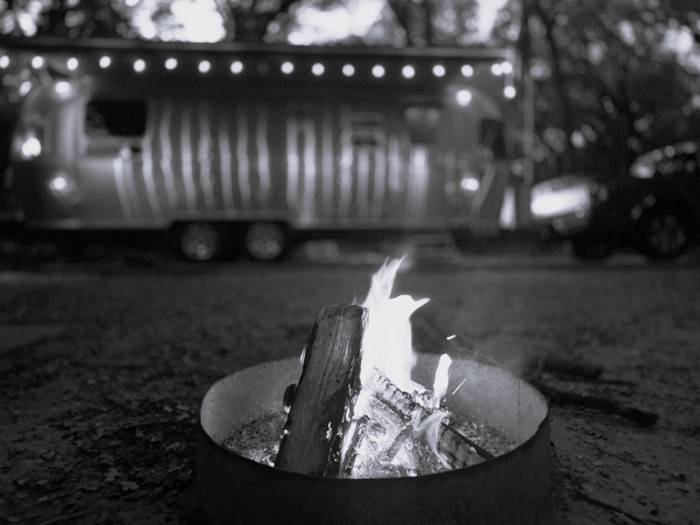
As we sat at the campfire this weekend, we began talking about the strange bargain of aging: The longer you live, the more stories you have to tell, yet there are fewer people with the time or the inclination to hear them.
From there, the conversation moved to all the ways a life can become smaller. The body establishes boundaries that didn’t exist before, familiar routines become difficult, independence gives way by degrees, and the social world can contract along with the physical one. Eventually we returned to a subject that has come up many times between us over the years, our experience of caring for Jon’s mom as her health declined and her world became increasingly isolated.
We watched that narrowing happen gradually. Each new physical limitation took something from her, and over time the ordinary freedom most of us scarcely notice until it’s gone became harder for her to maintain. But declining health was only part of what she experienced. At the same time her physical world was growing smaller, her social world was shrinking as well.
Some of that is the inevitable consequence of living a long life. People die. Friendships fade. Familiar places disappear. The circle of people who remember us when we were young naturally grows smaller. But not all isolation is inevitable. Sometimes people simply stop making the effort. Their own lives are busy and their attention is elsewhere, and the older person gradually moves from the center of the family’s life toward its periphery. There is always another commitment, another distraction, another reason a visit can happen later or a phone call can wait.
We saw that happen with Jon’s mom, and perhaps what still troubles us is knowing how much the people who stayed away missed.
We know because we were there.
She told us her stories, and we listened. We asked questions. We learned about people who had been gone for years and family relationships that existed long before we came along. Sometimes we spent hours exploring her childhood neighborhoods on Google maps, sometimes we took a motor tour of places she had lived. We learned what she remembered about those places, the people she had known, the choices she had made, and the experiences that had shaped her. Sometimes one recollection led unexpectedly to another, and a casual question opened the door to some corner of her life we had never known existed.
There were stories we heard more than once, of course, but even those repetitions feel different to us now. As the present offered her fewer places to go and fewer people with whom to share her days, memory remained somewhere she could travel freely. A story could return her to a house that no longer existed, to people long since gone, or simply to a younger version of herself whose world was larger and whose future still stretched out ahead of her. Listening gave us a glimpse of that world but, more important, gave her someone with whom to revisit it.
That is one thing we misunderstand about growing old. We tend to see isolation as another unfortunate condition of aging, as though loneliness simply arrives along with failing eyesight, aching joints or diminished mobility. But there is an important difference. We may be unable to stop the toll that time takes on the body, but we have considerable influence over how lonely old age becomes.
That lesson became impossible for us to ignore as Jon’s mother grew more isolated from other members of her family. They had the same opportunity we did to know her more fully, to ask about her life, or simply to sit beside her and listen to a story they might already have heard. Too often they were busy, distracted or absorbed in their own lives, and opportunities that must have seemed endlessly renewable eventually ran out.
There is something sad about realizing how easily a person’s presence can be taken for granted while they are still here. We assume there will be another birthday, another visit, another afternoon when we are less busy and can finally ask the questions we have been meaning to ask. The urgency becomes apparent only afterward, when there is no longer anyone to answer them.
What remains for us is gratitude that we had the time we did with Jon’s mom and, more important, that we spent so much of it simply being with her. During those last years, we found ordinary ways to make the time meaningful. We watched Cardinals baseball together for hours, shared old movies we loved, and prepared some of her favorite foods, especially tacos, pot roast and fried eggs. None of these things was remarkable in itself, but perhaps that was exactly what made them so important. They gave shape to an afternoon or an evening and, without anyone announcing that it was time to reminisce, gave memories a chance to find their way into the room.
The movies were especially good at that. We spent hours together watching our favorite films, and almost inevitably something on the screen would open a door. A song might remind her of another time. An actor could bring back another movie, which might lead to a memory of where she had seen it or who had been with her. A Christmas scene could carry us into holidays decades earlier, and suddenly we were talking about some family story we had never heard. Anything related to her Catholic faith prompted deeply meaningful conversations, even when we were tired and ready to call it a night.
Perhaps that’s why her isolation during those years remains difficult for us to reconcile. The same opportunity was there for others in the family. It required no grand gesture, only time, curiosity and a willingness to enter the smaller world that her declining health had created rather than expecting her somehow to re-enter theirs. There was still so much of her left to know, even as there were fewer places she could go and fewer things she could do. Some people simply never stayed around long enough to discover it.
We were fortunate to enter some of that world with Jon’s mom. We know things because she told us. We remember people we never met because she described them. Places we never visited nevertheless have a familiarity because we saw them through her memory. Those conversations became part of our own history, woven into afternoons when the true-crime programs were playing, evenings when an old movie was streaming, and meals shared around TV tray tables.
Others in the family have their memories of her, of course, but they cannot have these particular ones. Those could only come from being there.
Maybe that’s why all of this found its way back to us at the campfire. There’s something familiar about sitting beside a fire with someone you love and sitting beside them while an old movie plays or a baseball game stretches lazily into extra innings. The activity is almost beside the point. It simply gives you a place to be together long enough for other things to happen, for one story to lead to another, and for some detail from a life long past to find a new home in someone else’s memory.
Eventually, the fire burns down; the game ends; the credits roll; the television goes dark, and the room becomes quiet.
But every now and then, a favorite movie comes on again, or tacos are placed on the table; and something she once said finds its way back to us.
And for a little while, she is with us again.


