For more than a decade, it has often felt as though no aspect of American life was untouched by Donald Trump.
Politics, certainly, but also science and medicine, religion and education, international relations and business, journalism and the media, culture and the arts, the military and industry. He has been everywhere: in museums and courtrooms, churches and classrooms, universities and factories. Institutions that have existed for generations have found themselves responding to him, accommodating him, resisting him or reconfiguring themselves in anticipation of his chaotic cruelty. Regardless of how often we’ve tried to change the subject, seemingly every conversation has found its way back to Trump. What has he said? What has he done? What might he do next? What did he post overnight? Who has angered him? Who has pleased him? Who among his critics will eventually end up standing behind him smiling in the Oval Office?
Entire years of our lives have come to be measured this way.
That may be why the election last week felt different to us.
It is tempting, after an election in which voters so forcefully rejected the president’s party, to treat the result as a moment of vindication. After everything the country has been through, there is a sense of relief in discovering that there are limits after all. Limits to grievance. Limits to chaos. Limits to how much disruption people are willing to accept. Limits, perhaps, even to the extraordinary hold Donald Trump has exercised over the country since he descended that escalator more than a decade ago.
But relief is not the same thing as triumph, and triumph is not really what we feel.
What we feel is something closer to release.
For much of the past decade, Trump has seemed less like a politician operating within American life than a force around which American life was required to organize itself. People who loved him organized their lives and relationships around him. People who loathed him did, too. He had a permanent place at the dinner table. He divided friends and families and turned ordinary relationships into extensions of the national argument. There are people with whom we have not had meaningful conversations in years. Too risky. Nearly every morning when, like millions of Americans, we reach for our phones wondering what had happened while we slept.
Slowly, the extraordinary becomes ordinary.
That may be the most unsettling part to remember now. It isn’t any single outrage or rupture, but the accumulation of them; the way one unprecedented event followed another until unprecedented began to lose its meaning. We adjusted because that is what human beings do. Yesterday’s shock becomes today’s argument and tomorrow’s background noise. The temperature rises by degrees, and after a while we forget what the room used to feel like when it was more comfortable.
Then an election comes along and, suddenly, someone opens a window.
The remarkable thing about elections is that they take millions of private judgments and reveal them all at once. A person may feel alone in believing that something has gone badly wrong. Then the votes are counted, and millions of other people have apparently been thinking the same thing.
That doesn’t mean they all reached the same conclusion for the same reasons. Some voted because grocery prices are too high. Some were exhausted by the turmoil. Some objected to immigration policies, or the war with Iran, or the obscene exploitation of presidential power, or the steady erosion of institutional guardrails. Some probably cared about none of those things and simply decided they had had enough.
Democracy doesn’t require identical motives. It simply counts the choices.
And this time the choice was clear.
Yet we have learned enough from the past decade to distrust declarations that any political moment is final. Donald Trump is still the president. He retains enormous constitutional authority, particularly in foreign affairs, and two years is a very long time in politics. A president relieved of the need to face voters again can be diminished, but he can also be liberated from the restraints that elections impose.
So, out of an abundance of caution, we are not hanging a “Mission Accomplished” banner.
There is another reason for caution. Removing one man from the center of American life will not repair everything that his years there revealed.
Trump did not invent our anger. He did not create our loneliness, our distrust of institutions, our appetite for conspiracy or our increasingly tribal understanding of citizenship. He exploited those things brilliantly, sometimes ruthlessly, but they were already there to be exploited. If the country simply waits for him to leave Washington and assumes the problem will depart with him, we will have learned very little.
Nor should Democrats interpret a sweeping victory as permission to become consumed with revenge. There will be legitimate questions requiring investigation and legitimate exercises of congressional oversight. Accountability matters, but so does governing. People who voted because housing, food, insurance or healthcare have become unaffordable are unlikely to be satisfied by two years of televised hearings, however cathartic those hearings might be.
Perhaps that will be one of the tests of whatever comes next: whether we can recover the distinction between politics as performance and politics as work.
We’ve had enough performance.
What interests us more is the possibility that the country may finally be approaching something it has scarcely experienced since 2015: an American life in which Donald Trump is no longer the organizing principle.
That thought is stranger than it sounds.
An entire generation of young Americans has never known anything else. Someone who was 8 years old when Trump first ran for president is now an adult. For them, the shouting and emergency alerts, constitutional crises and endless arguments about this one improbable man are not a departure from American political life. They are American political life.
Those of us old enough to remember otherwise know that our politics was never serene. We romanticize the past if we remember it that way. There have been bitter elections, ugly campaigns, wars, impeachments, scandals and periods when Americans profoundly distrusted one another. Ronald Reagan was described as existentially dangerous. Bill Clinton’s presidency nearly drowned in scandal. George W. Bush presided over wars that divided the country. Barack Obama’s election exposed racial and cultural fissures that haven’t disappeared.
But presidents came and presidents went.
That rhythm matters.
One of the quiet geniuses of democracy is not that we always choose wisely. History provides ample evidence that we do not. It is that power is temporary. Presidents inhabit the White House; they do not own it. Political movements ascend and decline. Majorities assemble and dissolve. No election grants permanent possession of the country.
The Constitution assumes something about human beings that we sometimes forget: eventually, everyone will have to leave the stage.
Perhaps that’s why this moment feels less like a victory to us than the first faint sensation of waking after a very long and restless night.
We don’t know what comes next. Republicans must decide whether Trumpism can exist without Trump or whether they want something different altogether. Democrats have to demonstrate that opposition can become governance. Ambitious politicians in both parties are already looking toward 2028, because politicians are apparently the only people capable of reaching the end of one election and immediately becoming excited about another.
The rest of us might be forgiven for wanting a minute to simply absorb it all.
We’ve lived through a pandemic, economic upheaval, racial unrest, January 6, two impeachments, criminal trials, wars abroad, political violence, artificial intelligence arriving with astonishing speed and enough breaking-news banners to last several lifetimes. We’ve watched Americans retreat into incompatible versions of reality and sometimes wondered whether we still possessed enough shared truth to govern ourselves.
And somehow the republic remains.
Bruised, certainly. Changed, unquestionably. Not nearly as sturdy as we once assumed, but perhaps sturdier than we feared.
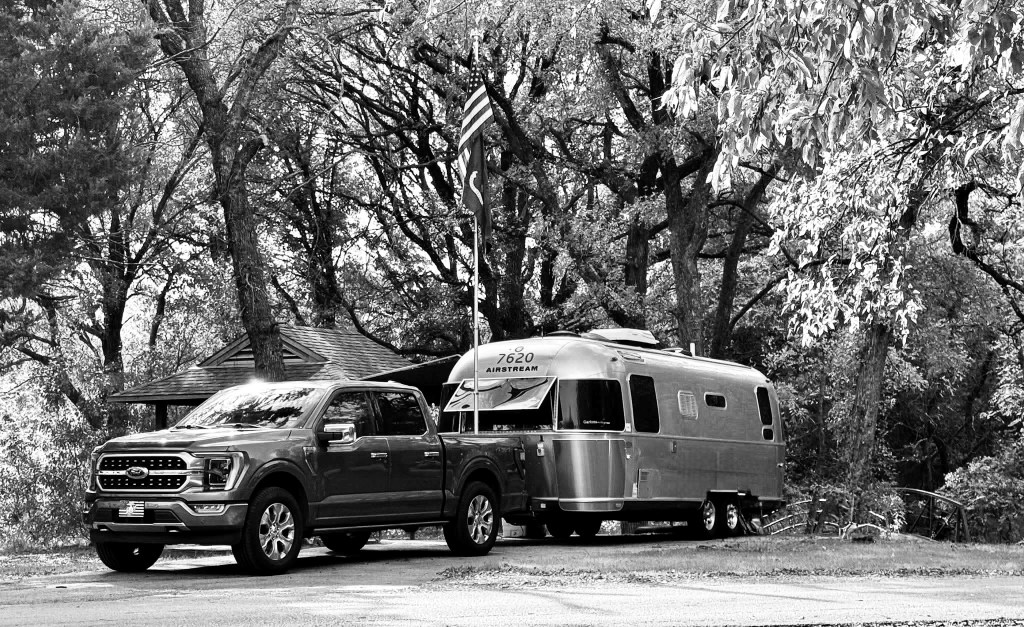
There is a particular feeling we know from the end of a camping weekend. For a few days, our world is reduced to something smaller and more manageable: A campsite beneath the trees, a fire to tend, something simple cooking for dinner, the sound of wind moving through the leaves or rain tapping against the roof of the camper. The things waiting beyond the campground haven’t disappeared; we’ve simply put a little distance between ourselves and them.
Then Sunday comes.
We take down what needs taking down, pack everything away and walk around the campsite one last time, following the rule we learned long ago to leave the place a little better than we found it. Eventually, there is nothing left to do but pull away.
Somewhere between the campground and home, our thoughts inevitably begin drifting toward Monday. Emails we haven’t read. Problems we don’t yet know exist. Conversations waiting to happen. Plans that may work and others that will almost certainly change. We can imagine what the week ahead might hold, but the truth is that we can’t possibly know.
Maybe a country faces its future much the same way.
For the first time in a long while, it feels as though something is ending, even if we can’t yet see what will replace it. There will be plenty waiting for us when we get there. Some of it will disappoint us. Some may frighten us. Some, we hope, may surprise us.
For now, perhaps it is enough to pack up the campsite, take one last look at the trees and head home, not knowing what Monday will bring but allowing ourselves to hope that things might turn out for the better.


